by Richard Peacock
Gilbert and Sullivan have taught me many things in my young life. They taught me to appreciate a snappy tune, for example. They taught me that pirates are actually far gayer than I previously thought. And they even taught me not to give dictatorial words to British tars, as they are ever ready for a knock-down blow. But they never taught me anything about evolution. Or what the hell a British tar is, for that matter.
So let me pick up the slack where G&S fell short. I present to you my version of "I am the Very Model of a Modern Major-General" as sung by a variety of life forms through the past three billion years of evolution. Enjoy!
I am the Very Model of Biological Evolution
(sung by a lone single-cell bacterium)
I am the very model for the start of life on planet Earth
Not animal or vegetable, but before you judge my worth
Consider how my genesis did not result from random chance,
But instead from other life all struggling for dominance.
If my genes are tough enough I'll outlive my competitors
And pass down my genetic traits just like did my progenitors
To my offspring who will survive far longer than the other cells
Giving them the chance they need to grow and reproduce as well!
(chorus of bacteria)
Giving them the chance they need to grow and reproduce as well!
Giving them the chance they need to grow and reproduce as well!
Giving them the chance they need to grow and reproduce as well-as-well!
(bacterium)
I only have one chromosome that forms a circle in my cell.
I haven't any ribosomes or membrane-surrounded organelles.
I'm not animal or vegetable, but before you judge my worth,
Recall that I'm the model for the start of life on planet Earth.
(chorus of bacteria)
He's not animal or vegetable, but before you judge his worth,
Recall that he's the model for the start of life on planet Earth!
CLICK HERE TO KEEP SINGING...
I am the very first chordate to ever walk upon the beach.
I've been living in the shallow shore with food and safety within reach,
But it wasn't till I lost my gills that I could stand upon dry land.
I am the ancient grandmother of modern-day amphibians!
With nothing that can hunt me now I can evolve to fill this niche.
For wherever there's a food supply life will adapt to eat the dish.
And of course the best survive to reproduce another day.
For the ones that find food first will pass along their DNA.
(chorus of tetrapods)
For the ones that find food first will pass along their DNA,
For the ones that find food first will pass along their DNA,
For the ones that find food first will pass along their DN-DN-A.
(female tetrapod)
The water's where I still must go to reproduce and to lay eggs,
But one day soon I will evolve to live always upon the land,
I am the ancient grandmother of modern-day amphibians!
(chorus of tetrapods)
But one day soon she will evolve to live always upon the land,
She is the ancient grandmother of modern-day amphibians!
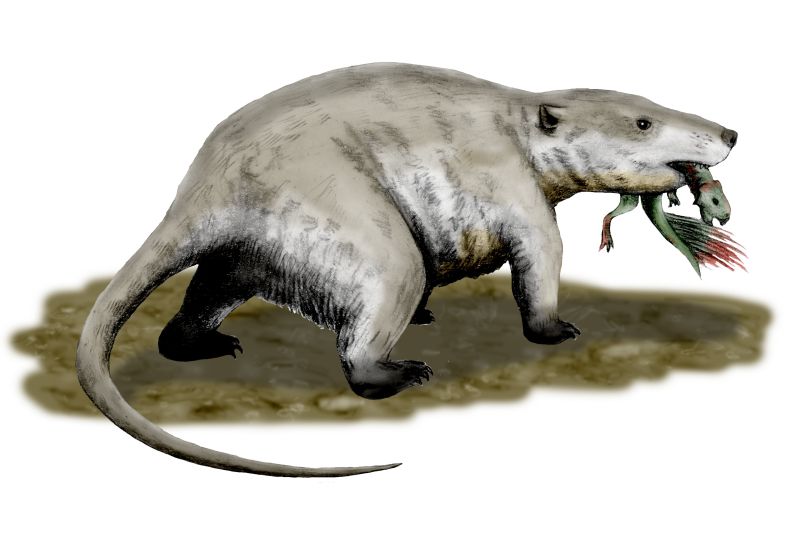
(sung by a primitive mammal in the Jurassic period)
I am the very product of a 3-billion year long ancestry.
An endothermic quadrupedal live-birth-giving mammal is me,
I will survive the asteroid that soon extincts the dinosaurs,
'Cause while the world is cooling fast my fur and hair will keep me warm.
My body size helps emphasize I don't require a lot of food.
Tyrannosaur eats a ton or more, while I only need a pound or two.
This means of course in times of drought and famine I will do just fine,
While dinos that require much food will meet their maker in no time.
(chorus of primitive mammals)
While dinos that require much food will meet their maker in no time.
While dinos that require much food will meet their maker in no time-a-time.
(primitive mammal)
With the dinos gone we're all alone with nothing left to hunt us now.
And all the niches opened up: the sea and air and on the ground.
Our new homes select for change and force us to diversify,
Forming all the furry life from bats to dogs to humankind!
(chorus of primitive mammals)
Our new homes select for change and force us to diversify,
Forming all the furry life from bats to dogs to humankind!
* It was once thought that ancient lung fish were the origin of land-dwelling tetrapods (four-legged animals), but new fossil discoveries have proven that some ancient fish were developing legs, arms and even hands long before they ever decided to go for a stroll on dry land. The picture is a recreation of Icthyostega, an intermediate fossil between fish and amphibians.
The Multiverse is written by Richard Peacock, who generally doesn't know what he's talking about, and will gladly sacrifice scientific accuracy for the sake of a rhyme. Send rhyming complaints to richard@amateurscientist.org.
Friday, October 17, 2008
I am the Very Model of Biological Evolution



Tuesday, September 16, 2008
Haiku, Youku, We all Ku for The Sun-Ku
by Richard Peacock
I used to believe the Sun was a 32-mile-wide disc which hovered over the Earth at an altitude of 3,000 miles. Of course, now I know that it's actually 45 miles wide. But lately I have been wondering: what else don't I know about the Sun? And, could I summarize that information into a form of 17th century Japanese poetry? Yes. Yes, I could.
Haiku, Youku, We all Ku for The Sun-Ku
The Earth is massive.
The organic residue
On the top is us.
But even the Earth
Is tiny next to the sun,
The source of all life.
Sol is truly huge,
And an almost perfect sphere,
A main sequence star.
It is in motion.
Sol orbits the galaxy
In cold, slow silence.*
We are dragged along
Like barnacles on a boat
Through the Milky Way.
He has completed
Only twenty five orbits
Since his ancient birth.
The surface of Sol
Is slowly getting hotter.
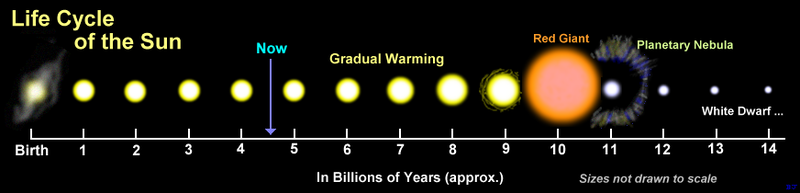
Earth will die in fire.
In one billion years
The oceans will boil away
And all life with cease.
After much longer,
Sol will become a giant.
Earth may be swallowed.
We will mourn the Earth,
As we watch with telescopes
From ships past Neptune.
Our ancestral home
Will then be forever gone
But we will endure.
*Actually, the Sun (and the entire solar system) orbits the galaxy at a speed of 220km (136 miles) per second. It takes about 250 million years to complete one circuit of the Milky Way, and around 1,440 years to travel one light year through space.
The Multiverse is written by Richard Peacock, who generally doesn't know what he's talking about, and will gladly sacrifice scientific accuracy for the sake of a rhyme. Send rhyming complaints to richard@amateurscientist.org.

Monday, August 18, 2008
Sentencing the Heretic
by Richard Peacock
In 1633, the astronomer Galileo was ordered to stand trial before Pope Urban VIII on formal charges of heresy. His crime was proposing that the Earth moved around the Sun, and not the other way around. Since the Bible taught that the Earth was stationary and not in motion at all, this enraged the Church, which promptly convicted Galileo and sentenced him to house arrest. And, if the world was like a musical, this is just what his sentencing hearing might have sounded like.
Sentencing the Heretic
The year is 1633,
And you are Galileo Galilei,
You've been brought here by Church decree
To answer for your heresy!
Mad man! Devil! That's what we'll call you
Unless you change your tune.
How dare you scare us with these letters
Which spell the Church's doom?
This little idea of yours,
Where the Earth goes round the Sun,
Can't you see the fallacy?
Don't you see your argument's done?
For if this wan hypothesis
Were ever really proved,
Then the Bible would be wrong in Psalms,
Where "the Earth cannot be moved."
I will denote your telescope
Is quite a clever machine,
You've seen the moons of Jupiter
And even Saturn's rings*.
But despite that brilliant tinker toy,
You've incurred the Church's wrath.
For who are you to dare declare
That nature is based on Math?
How I pity you, Galilei,
You could have been our best.
But as you insist on your beliefs,
I must place you in house arrest.
Guards! Take away this stumbling block!
Banish him from these lands!
He has not in mind the thoughts of God,
But just the reasoning of man.
*Though Galileo was the first to observe Saturn's rings with his
rudimentary telescope, he believed they were moons rather than
planetary rings.
The Multiverse is written by Richard Peacock, who generally doesn't know what he's talking about, and will gladly sacrifice scientific accuracy for the sake of a rhyme. Send rhyming complaints to richard@amateurscientist.org.

Monday, July 21, 2008
Hello, Mr. Jellyfish
by Richard Peacock
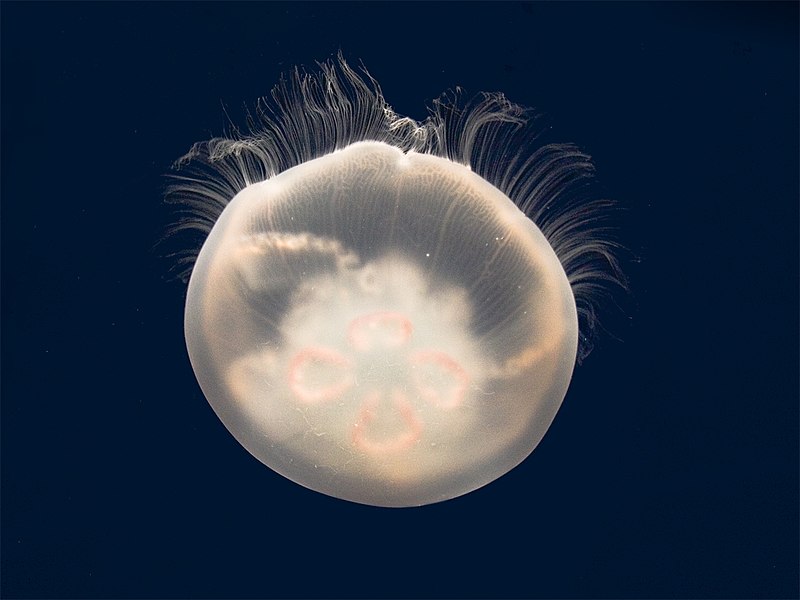
Who doesn't love jellyfish? Communists. That's who. But we in the free countries of the Earth just love the little critters. We love watching their sleek bodies undulate as they swim. We love their playful personalities when they see passing boats. We love feeding them handfuls of anchovies at Sea World. Oh wait-- those are dolphins. Then what the hell are jellyfish? Perhaps this poem will educate me...
Hello, Mr. Jellyfish
Hello, Mr. Jellyfish.
I promise I won't bite.
I'd give you a kiss right on your crown
If not for your cnidocytes.
Those stinging cells
Surely help repel
Creatures that want to eat you.
But even still, I'll shake your hand
To prove I'm pleased to meet you.
Tell me, Dr. Jellinstein,
Could you prescribe a pill?
I just cannot concentrate
From the excitement that I feel.
Your morphology is just so cool,
I can't believe it's real.
And tell me how do you get so big
Eating just fish and little krill?
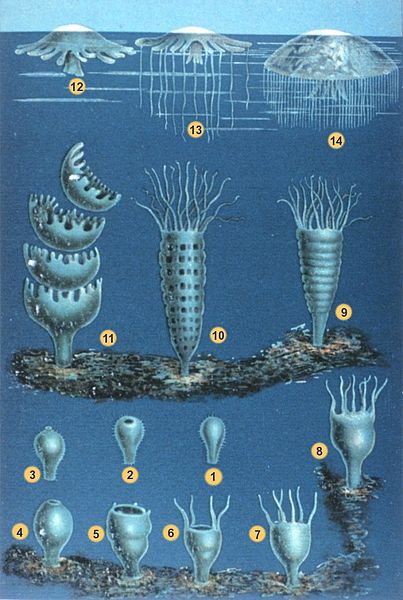
You start your life just like a plant,
Anchored to the ground,
But instead of flowers that you sprout,
You bud off free-swimming crowns!
And when those medusas fully mature,
They take themselves a wife,
But sadly after mating,
That's the end of their short life.*
The little baby that results
From their romantic night at sea,
Finds a spot on the sandy floor
And anchors for security.
So thus the cycle then repeats
For the little jelly children,
Which will one day swim and take a mate
Deep within the briny ocean.
Oh, Señora Gelatina,
How you tempt me with your polypoid stage.
But I shan't be taken in again
By your fickle, tentacled ways.
I shall have to be content
To admire you from afar.
Because you, my jellyfish of the seven seas,
Are grander than the grandest star (fish).
*While most jellyfish only live a couple months, there is one species, Turritopsis nutricula, that actually re-enters its younger polyp stage after reproducing, and repeats the cycle again. This effectively makes the species immortal. It is the only known case of an animal which can completely revert to a colonial, sexually immature stage from a mature solitary form.
The Multiverse is written by Richard Peacock, who generally doesn't know what he's talking about, and will gladly sacrifice scientific accuracy for the sake of a rhyme. Send rhyming complaints to richard@amateurscientist.org
Monday, June 23, 2008
Ode to the Eye
by Richard Peacock
Proponents of Intelligent Design use a lot of supercilious arguments against evolution, stating that, obviously, some adaptations are so complex that a supernatural being's design is the only explanation for its existence. This concept is referred to as "irreducible complexity" by ID-hero Michael Behe. One of his most commonly cited examples is the evolution of the eye, which, he claims, could have never evolved naturally because it's so complex. Of course, scientists know how the eye evolved, so I decided to detail it in this week's poem. Enjoy!
"Ode to the Eye"
Eye's evolution first begins in the Cambrian Explosion,
Though it was simply molecules which barely sensed effulgence.
Single-celled organisms used these proteins to detect
The surface of the ocean, for which direction to predilect.
When life became multi-celled, and continued to evolve,
The primitive proto-eye, too, developed right along.
The photosensitive proteins collected into light-detecting cells
Allowing basic shape discernment from the ocean's many perils.
Suddenly predators had a huge advantage when hunting for their prey,
So the prey were pressured to evolve an even better light-detecting way.
In biology, this scenario is termed an "evolutionary arms race"
As it speeds development of adaptations to many times its normal pace.
Very quickly true eyes evolved from these light-detecting cells,
Once they recessed into a pit to make them directional as well.
A clear covering over the top would one day become the lens,
But at the time it only served to keep precious fluids in.
The opening narrowed to a point, just like a pin-hole camera,
To project an image through the eye to what now we call the retina.
This gave prey the fine details of the dangers of their surroundings,
And predators the ability to hunt from distances astounding.
Some animals developed compound lenses to see in many directions,
While others moved their eyes with muscles to perform their inspections.
Spiders have eight simple eyes to solve the multi-directional problem,
While snail eyes sit on bending stalks to sense only basic movement.
The modern human eye's complexity leaves every scientist impressed,
But that doesn't mean it couldn't evolve through incremental steps.
And despite ID-proponents' claims that its complexity we cannot reduce,
Its evolution is easily traced from single-celled life to you.
The Multiverse is written by Richard Peacock, who generally doesn't know what he's talking about, and will gladly sacrifice scientific accuracy for the sake of a rhyme. Send rhyming complaints to richard@amateurscientist.org


Monday, June 9, 2008
Does Race Really Exist?
by Richard Peacock
Lately I've been thinking more and more about the concept of race. You know, that cute little notion that human beings of one color are intrinsically different from human beings of another color. It's an idea that's been used to justify some pretty horrible things the world over for most of human history. But what is it? Does "race" have any scientific basis whatsoever? Perhaps a poem will solve this riddle...
"Does Race Really Exist?"
We all know the science
Of our DNA,
How the molecule is passed
From our parents one day.
In the form of a sperm
Or egg it may be,
If you're talking about Dad's
Or mom's haploid gametes.
So it kind of makes sense
In a logical way
That our race should be found
In our genes, or let's say
At least in our features.
So we can agree
That those I resemble
Are the same race as me.
And yet some will tell you
Race doesn't exist.
We're all the same species,
Say biologists,
And our perception of race
Is shaped with aplomb
By society's beliefs about
Which tribe we're from.
Skin color, it seems,
Is a response to the Sun,
To the ultra-violet light
And the harm that is done.
If it enters too deeply
Inside of our skin,
It denatures DNA,
Causing cancer within.
Yet it's required
For vitamin-D production,
Something we need
For our bodies to function,
And that takes place
Just under the skin,
So we need to allow
A little UV in.
Finding this balance
Can be very tough,
To block most UV light
Yet make sure it's enough
For the production of vitamins
That our bodies need.
So evolution found a way
To ensure we succeed.
Our skin color varies
Vertically on the globe
Based on how far
From the equator we go.
This is the balance
Of how much UV we block
Based on the average
Sunlight we stock.
Less sunlight reaches
The surface of Earth
In the South hemisphere
And also the North,
So skin must be lighter
To let UV in,
Or else they can't make
The "D" vitamin.
But at the equator,
Sunlight falls quite direct
And if skin wasn't darker,
Too much UV would be let
Into the cells of the
Inhabitants' skin.
So the saving trait there
Is dark melanin.
So, gentle readers,
I hope I've informed
On why it doesn't matter
With which color you're born.
Race doesn't exist
From a science POV,
It's just a construct
Of our society.
And the relative worth of a man
Can't be scored
By the phenotypic display
Of the pigment he's stored.
The Multiverse is written by Richard Peacock, who generally doesn't know what he's talking about, and will gladly sacrifice scientific accuracy for the sake of a rhyme. Send rhyming complaints to richard@amateurscientist.org


Monday, June 2, 2008
Multi-Limericks
by Richard Peacock
Greetings Multiverse lovers (i.e., people who accidentally noticed this post)! Who doesn't love a dirty, filthy, bathroom-stall quality limerick? Okay, now how many of those people also love nerdy, vague, and hard-to-rhyme computer science themed limericks? If you fall into this narrow subset, then read on!
My first limerick is about Alan Turing, the father of modern computer science. Among is many contributions, he devised the "Turing Test," which tests whether or not a computer A.I. can fool a person into thinking he is chatting with a human being through a remote terminal.
"Alan Turing"
A mathematician named Turing professed:
"We should put computer AI to the test!
We'll have it converse
In diction (quite terse),
And ask, 'Was computer or human the best?'"
My second limerick remembers everyone's favorite ancient computer, the ENIAC (pronounced In-EE-Ack). It filled several rooms, used thousands of vacuum tubes, and took over 150,000 watts of electricity to run.
"ENIAC"
There once was a computer named ENIAC,
With stats that would give you a heart attack.
It took up 600 square feet,
But was Turing-Complete,
And programming required a brainiac.
Finally, a limerick about our little friend, the transistor. It's a super-cheap, super-fast, and super-small electronic component that replaced vacuum tubes in the 1950's. Your average modern computer has about 230 million of the little buggers on the CPU alone.
"The Transistor"
Vacuum tubes were all well and good,
But didn't switch as fast as they should,
So Bell Labs designed the transistor
(Vacuum tube's solid-state sister)
And made them as cheap as they could.
The Multiverse is written by Richard Peacock, who generally doesn't know what he's talking about, and will gladly sacrifice scientific accuracy for the sake of a rhyme. Send rhyming complaints to richard@amateurscientist.org
Monday, May 26, 2008
Oort Cloud, Be Proud!
by Richard Peacock
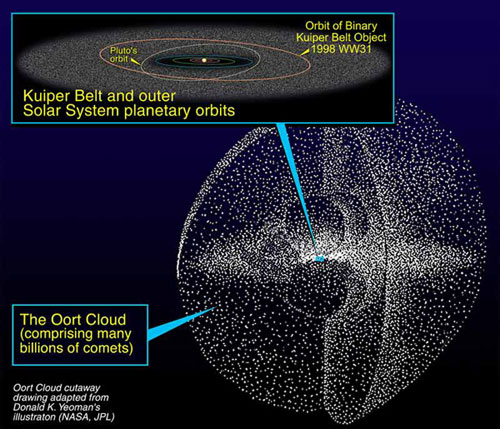
I was recently contacted by a Christian high-school student who was taught that comets were proof that the Universe is only about 6,000 years old. "How the hell does that make sense?" you may be asking yourself. Well, the young man explained, since comets have a short lifespan** (some for only a few thousand years), then wouldn't they have all vanished by now, if the universe is billions of years old? I wrote back about the Oort cloud, which is a vast field of chunks of material way out past Pluto, which periodically creates new comets. "How the hell does it do that?" you may be asking yourself again. I will now explain, through the art of poetry...
"Oort Cloud, Be Proud!"
Oort cloud, be proud
Of your cosmic contributions!
Hurling comets at our sun,
There to meet forlorn conclusions.
Comprised of chunks of rock and ice,
A swarm of messy debris
At least 2,000 AU's away,
Too far for us to see.
As our solar system moves through space,
You are perturbed by other stars'
Gravitational pulls and tugs,
Though they are very far.
And these little gravitational bumps
Dislodge the chunks from their positions,
And start them creeping towards the sun
On ten-thousand year long missions.
Though your total mass is somewhat small,
(Only five times the mass of Earth)
Your age is probably the same as ours:
5 billion years since your cosmic birth.
It's likely you're the one to blame
For our past global extinctions,
Brought on by comets from the sky
From your outer-solar secretions.
But without extinctions we would not have
Such diversity of life,
Caused by dying species leaving
Open niches full and rife.
New species then evolve
To fill the open niche,
Finding new requirements
That they then must adapt to meet.
So be proud, Oort cloud,
Of your determination and resolve,
For without your planet-killing-comets,
We might never have evolved.
** I wanted to add one more detail about the young man's question: he had been taught that all comets only survive for a few thousand years. This is incorrect. Only "short-term comets" melt away that quickly. Quick fun fact: The Hale-Bopp comet, whose sighting in 1997 prompted the Heaven's Gate cult members to all castrate and then kill themselves, was generated by the Oort cloud.
The Multiverse is written by Richard Peacock, who generally doesn't know what he's talking about, and will gladly sacrifice scientific accuracy for the sake of a rhyme. Send rhyming complaints to richard@amateurscientist.org

Monday, May 19, 2008
O Platypus! My Platypus!
by Richard Peacock
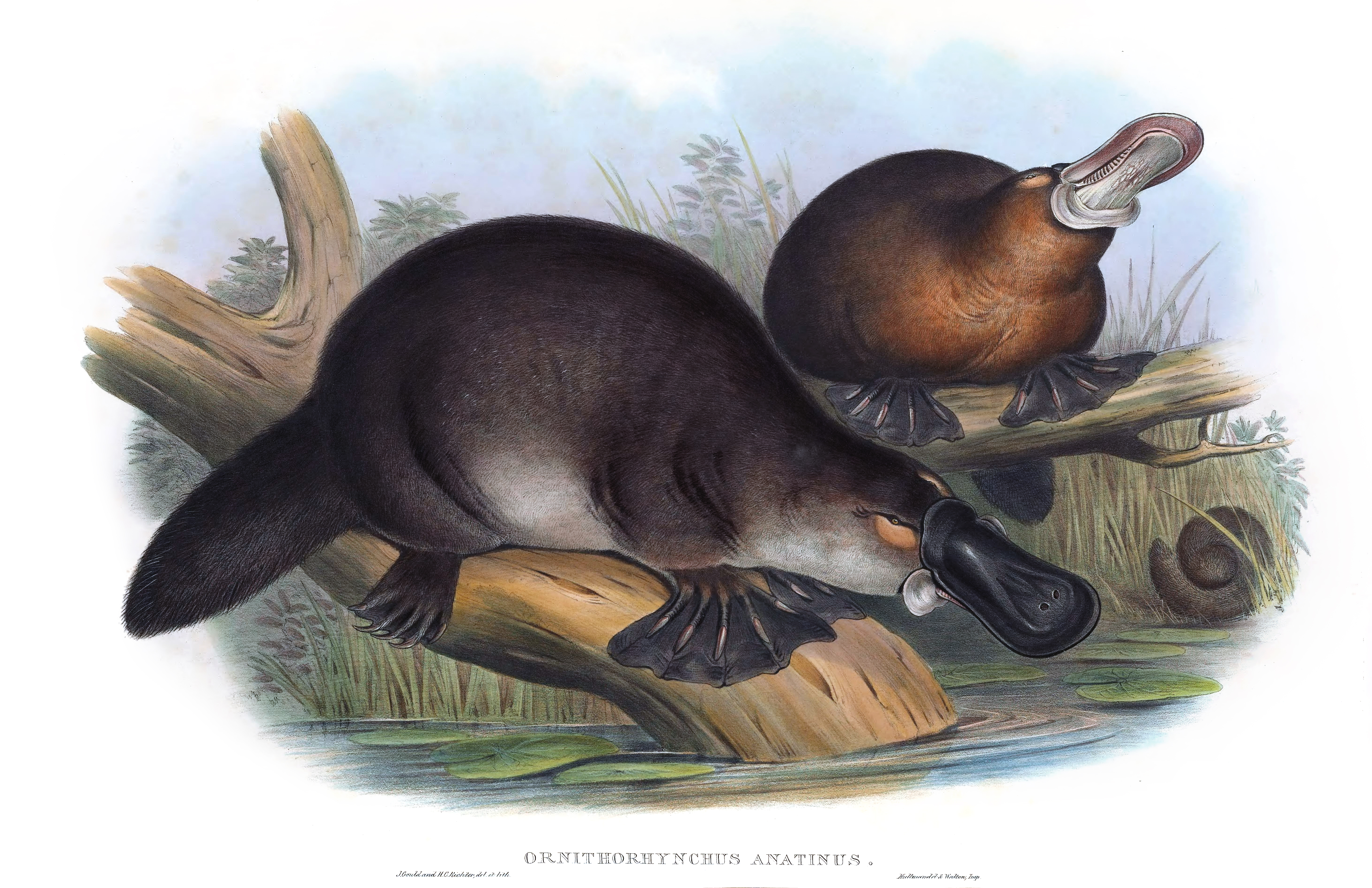
This week's Multiverse focuses on one of the strangest (and also cutest) freak of nature: the duck-billed platypus. It lays eggs, has one tube for both urine and feces, and is one of the only mammals to have venom glands. Also, no nipples. It just sort of oozes milk through its skin. Actually, it's a pretty gross animal. Enjoy!
"O Platypus! My Platypus!"
O platypus! My platypus! Your bill so flat and rubbery,
How you spend your days in waterways, and make your nests from shrubbery!
And yet I hear from biologists near that you're not like other mammals.
You still lay eggs, have venomous spurs, and don't have any nipples!
But O, milk! Milk! Milk!
O, how you feed your young!
How you secrete milk through you skin,
Which they lap up on their tongue.
O platypus! My platypus! Some even thought you were a fraud
When you were first discovered and taken home abroad.
Your duck-billed, beaver-tailed, otter-footed frame
Looked like pieces sewn together for some fantastic claim.
But platypus! Dear friend!
Though at first you seemed a lie,
You're now Australia's famed mascot,
You've caught every Aussie's eye!
My platypus does not answer, he has no lips to speak.
And though it looks just like a duck's, he does not have a beak.
The bill is used to hunt for prey in riverbeds and streams,
By detecting faint electrical blips as on a radar screen.
Exault! O, monotremes!
(The type of mammal you are).
Your native son has brought a smile
To biologists near and far.
The Multiverse is written by Richard Peacock, who generally doesn't know what he's talking about, and will gladly sacrifice scientific accuracy for the sake of a rhyme. Send rhyming complaints to richard@amateurscientist.org

Monday, May 12, 2008
What is Space?
by Richard Peacock
Greetings Amateur Scientist fans! You may recognize me as Richard Peacock, contributing editor to the Amateur Scientist blog, and all around nice guy. And until very recently, I was Brian Thompson's co-host on the Amateur Scientist podcast. Some may be wondering what I did to Brian to make him fire me, but I'm afraid I can't confirm or deny the rumors that I "seduced" his "father."
At any rate, I will now be splashing my entertainment on your face in regular installments, in the form of science poetry! Doesn't that sound fun-- hey, wait, where are you going?
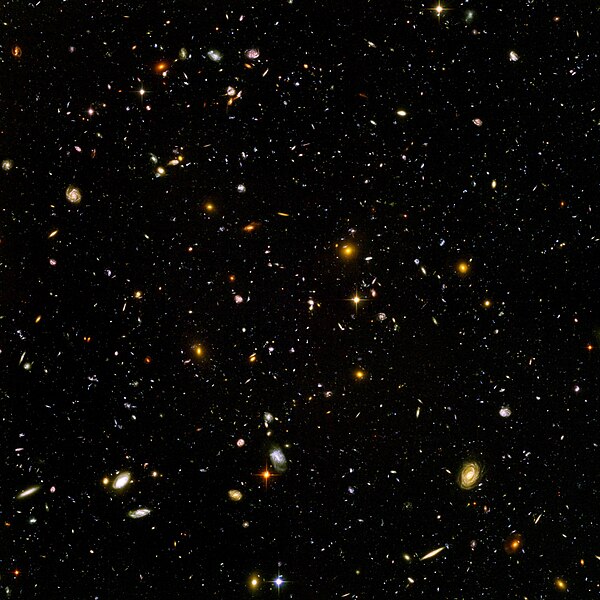
In this first episode of my science poetry series, called The Multiverse, I've decided to look at the strangeness of space. It's this weird substance with no mass, yet it's flexible like a fabric and has unforeseen properties. Wouldn't you like to hear a poem all about it?
"What is Space?"
What a strange place, this outer space,
Lacking form, yet retaining grace
As it bends and expands, Yet stays in place.
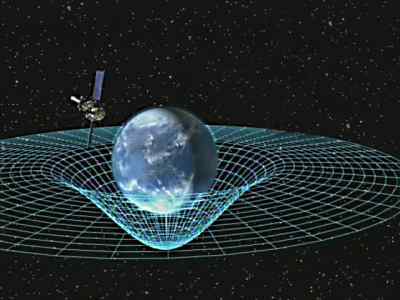
Einstein suggested theoretically
That space will curve with gravity,
And both space and time are intertwined
And can't be thought of separately.
So therefore when a planet moves
Through space it actually carves a groove,
And were it to stand completely still
Time itself would halt as well.
But if you travel really fast
You'll find you are attaining mass!
And at the speed of light you'll see
Your mass has reached infinity!
And then there isn't any force
That can push you faster. Of course
This is why astronomers agree
There's nothing faster than light speed.
But here's a fact that's hard to believe:
Space itself can break this speed.
It was Edwin Hubble who first described
How this appears with galaxies.
We now know from observation
That outer space prefers inflation.
Every point in space pushes away
From all the rest at a constant rate.
And at great distances we realize
The universe is expanding in size!
The speed at which is relative
To how far away our reference is.
Space in close proximity
Expands at rates infinitesimally,
But billions of light years from our galaxy
It's swifter than light, surprisingly!
So what is space? This strange material
We cannot taste or touch or feel?
What about gravity causes it to bend?
And why does space want to expand?
Does this expansion go on and on,
Or one day will the expansion end?
What a very strange place, this outer space.
Perhaps too strange to understand.
I'm just happy to simply call it my friend.
The Multiverse is written by Richard Peacock, who generally doesn't know what he's talking about, and will gladly sacrifice scientific accuracy for the sake of a rhyme. Send rhyming complaints to richard@amateurscientist.org